Land Clearing Near Wetlands Jacksonville FL — 5 Costly Permit Mistakes That Stop Projects Cold
Introduction:
Land clearing near wetlands Jacksonville, FL ends more projects than bad weather.
bad soil, and bad contractors combined.
A Westside property owner called us in March 2023.
He had already cleared 1.2 acres when the stop-work order arrived.
His crew had cleared to within 31 feet of a drainage corridor on the eastern boundary.
SJRWMD requires a minimum 50-foot upland buffer from that wetland classification.
He was 19 feet short.
Daily fine: $10,000. Project halt: 22 days. Compliance cost: $8,200.
His clearing crew had not flagged the corridor.
We flagged one just like it on his neighbor’s lot six weeks later — before anyone moved a machine.
The 2021 Arlington Job That Cost a Client $31,000
We were not the first crew on this site.
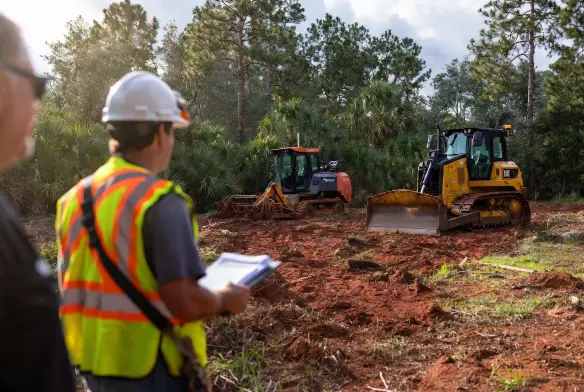
A 3.4-acre Arlington commercial parcel. Mixed pine and palmetto scrub.
The original crew cleared it in four days. No permit check. No soil probe. No buffer flag.
They hit a jurisdictional wetland at the northwest corner on day three.
They finished anyway.
SJRWMD issued a Notice of Violation 11 days later.
Mandatory restoration cost: $14,800. Mitigation bank credit purchase: $9,400.
Legal and consulting fees: $6,800.
Total: $31,000. On a site where the clearing itself cost $6,200.
The client called us to manage the remediation.
We spent four days flagging, documenting, and submitting the corrective ERP application.
It passed on the second review.
That $31,000 lesson is why we run a full SJRWMD parcel check on every Duval County
job before the first machine rolls — and why we walk every boundary with a
Trimble GPS unit before we quote anything near a drainage feature.
SJRWMD Land Clearing Permit Jacksonville — What Actually Triggers a Permit
Most Jacksonville FL property owners assume wetland permits are for large commercial
projects. That assumption is the most expensive mistake in Duval County land clearing.
Here is exactly what triggers an SJRWMD Environmental Resource Permit in Jacksonville:
Any clearing or grading that disturbs more than 1 acre of land.
Any activity within 25 to 75 feet of a delineated wetland boundary —
buffer distance varies by wetland classification and habitat value.
Any clearing that creates more than 4,000 square feet of impervious surface.
Any filling, grading, or vegetation removal within a surface water floodplain.
Any project adjacent to a jurisdictional wetland regardless of acreage — if the
activity has the potential to alter wetland hydrology or function.
The last point stops most people.
You can own a 0.4-acre residential lot in northwest Jacksonville with a
drainage ditch running along the back property line.
That ditch may be a jurisdictional surface water.
Clearing to within 40 feet of it without an ERP is a violation.
No size exemption. No residential exemption.
Wetland Buffer Land Clearing Duval County — The Distances Nobody Posts Clearly
How to Identify Wetland Boundaries Before Clearing Jacksonville FL
This is the part competing crews skip.
Buffer distances in Duval County under SJRWMD jurisdiction:
| Wetland Classification (Duval County) | Mandatory Upland Buffer | Common Indicator Species | Enforcement Risk Level |
|---|---|---|---|
| Isolated Wetlands Under 0.5 Acres total | 25-Foot Minimum Setback | Buttonbush, Wax Myrtle | Moderate Fines if cleared without ERP |
| Forested Wetlands Cypress strands & dense canopy | 50-Foot Minimum Setback | Bald Cypress, Swamp Bay, Water Oak | CRITICAL Mandatory restoration orders |
| Freshwater Marshes Wet prairie systems & sloughs | 50-Foot Minimum Setback | Lizard’s Tail, Cattails, Maidencane | HIGH RISK $10,000 daily penalty zone |
| Riparian Corridors Streams, floodplains & creeks | 50 to 100-Foot Setback Varies by stream order | Willow, Red Maple, River Birch | HIGH RISK Subject to multi-agency reviews |
| Tidal & Estuarine Systems St. Johns River tributaries | 100-Foot Minimum Setback | Black Needlerush, Smooth Cordgrass | MAXIMUM Army Corps coordination required |
How we identify boundaries before clearing on every Jacksonville FL job:
Step 1 — SJRWMD GIS Wetland Layer check. We pull the parcel on SJRWMD’s online
mapping system before we ever visit the site. This flags all known jurisdictional
wetlands and surface waters within and adjacent to the property.
Step 2 — USDA Web Soil Survey. Hydric soils — the underlying indicator of wetland
classification — show up in soil classification data. Plummer and Pelham soil series
in Duval County are hydric and flag potential wetland adjacency immediately.
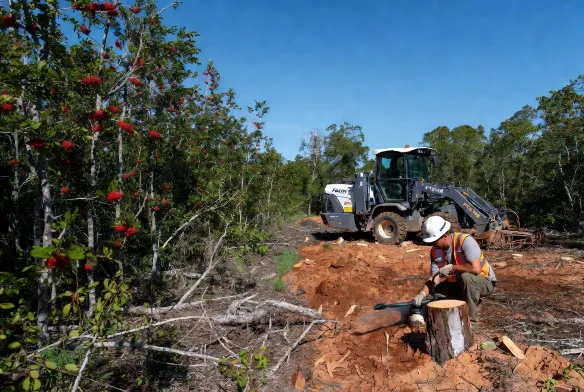
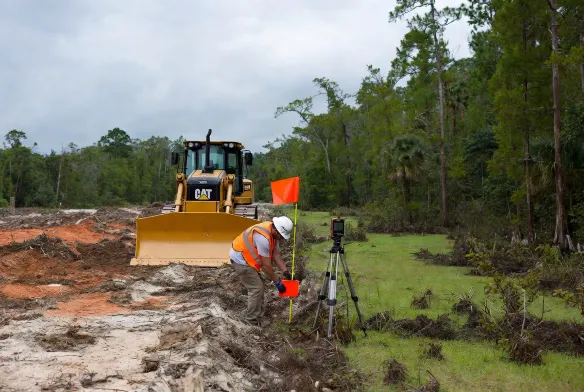
Step 3 — On-site Trimble GPS boundary walk. We map the actual clearing boundary
against the flagged wetland edge. We establish physical marker flags at the required
buffer setback before equipment arrives.
Step 4 — Vegetation indicator check. Wetland indicator species — water oak,
swamp bay, buttonbush, and lizard’s tail — along clearing edges signal hydric
conditions that may not appear in GIS data on recently altered parcels.
This process takes 50 to 90 minutes on a standard residential or small commercial lot.
It costs nothing on any Duval County project we take.
The alternative costs $10,000 per day.
Army Corps of Engineers — The Second Layer Most Jacksonville Crews Ignore
SJRWMD is not the only regulatory body for wetland-adjacent clearing in Jacksonville FL.
Section 404 of the Clean Water Act — administered by the US Army Corps of Engineers
Jacksonville District — applies to any filling, grading, or clearing that affects
waters of the United States.
This includes:
Navigable waterways and their adjacent wetlands.
Isolated wetlands with a connection to interstate commerce.
Tributaries of the St. Johns River in Duval and St. Johns Counties.
Section 404 Nationwide Permit 27 covers most routine vegetation clearing in
wetland buffers for maintenance purposes — but it does not cover new land clearing
for development without prior Army Corps coordination.
In the 2021 Arlington case above, the Section 404 issue added 19 days to the
remediation timeline and $6,800 to the legal costs because the original crew
had no Army Corps pre-clearance on a parcel adjacent to a mapped tributary.
Coordination between SJRWMD ERP and Army Corps Section 404 happens simultaneously
in most Jacksonville FL commercial clearing applications.
On residential lots under 0.5 acre disturbed, Section 404 Nationwide Permit
coverage usually applies automatically.
On anything larger — or anything with a mapped waterway adjacency — get the
Army Corps coordination in writing before clearing starts.
CONCLUSION:
Land clearing near wetlands Jacksonville FL is not complicated — but it is unforgiving.
The SJRWMD rules exist. The buffer distances are published.
The $10,000 daily fines are real and they are being issued in Duval County right now.
The Westside property owner paid $8,200 because his crew skipped a 50-minute site check.
The Arlington client paid $31,000 because his crew skipped a parcel permit review.
Call Marcus directly at (904) 748-4055.
We will walk your property, run the SJRWMD GIS check, flag every buffer boundary,
and tell you exactly what permits your Jacksonville FL project needs — before we start.
Land Clearing Near Wetlands Jacksonville FL — Frequently Asked Questions
Stop Paying Twice — Hire the Right Crew First
The Southside homeowner got the cheapest quote on Facebook Marketplace.
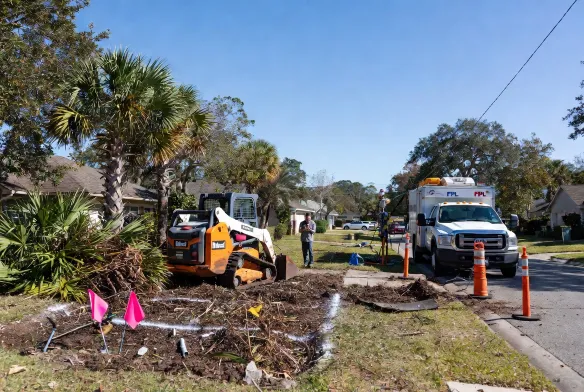
It cost her $3,400 upfront — and $4,200 more after the FPL strike.
One licensed crew with proper insurance would have cost less total.
Call Marcus at (904) 748-4055. Free site walk. No deposit required.