Land Clearing for Septic Systems Jacksonville FL — 6 Expensive Mistakes That Kill Perc Tests
Land clearing for septic systems Jacksonville FL is not the same job as
clearing land for a building pad.
Most crews do not know the difference.
An Orange Park homeowner learned this in August 2022.
His 1.4-acre lot was cleared fast — four-day job, reasonable price, machines gone by Friday.
Duval County Health Department soil evaluation came back failed three weeks later.
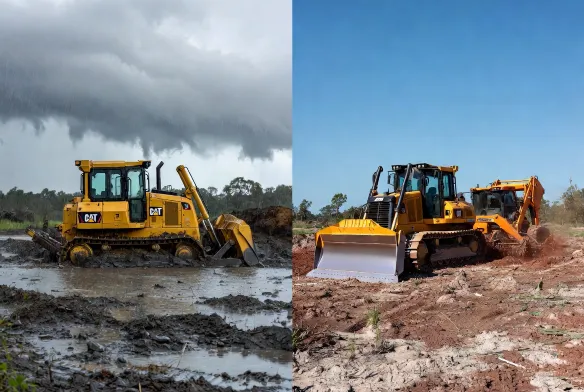
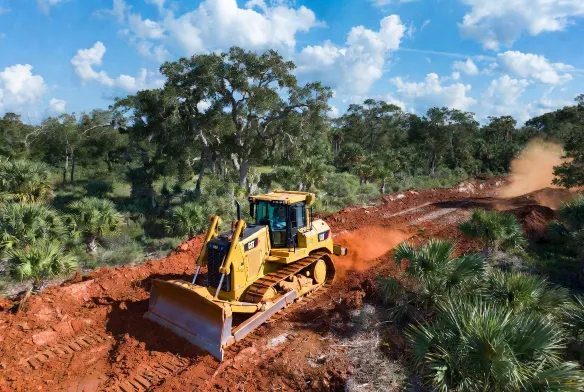
Reason: the clearing crew had compacted the primary drainfield area with a CAT D6N
dozer making repeated passes over the same ground.
Percolation rate dropped below the Florida minimum of 60 minutes per inch.
The lot needed $7,400 in soil remediation before the permit could proceed.
The clearing crew had moved on. The homeowner paid alone.
The 2020 St. Johns County Job That Taught Us Drainfield Mapping
We were the second crew on that St. Johns County parcel.
2.1 acres. New residential build. Septic installation planned for the northwest corner.
The original crew had cleared the entire lot uniformly — same equipment pass pattern,
same dozer pressure, corner to corner.
When the DOH soil evaluation came back, the northwest quadrant had failed percolation.
Sequential loading test showed compaction at 14 inches depth.
Normal Duval County sandy loam compacts to near-impermeability under repeated
20-ton equipment passes on the same line.
Remediation: deep tilling with a subsoiler, organic matter amendment, retest.
Cost: $6,200. Timeline added: 31 days.
We cleared the adjacent parcel in January 2021.
Before we started, the property owner showed us the septic permit application.
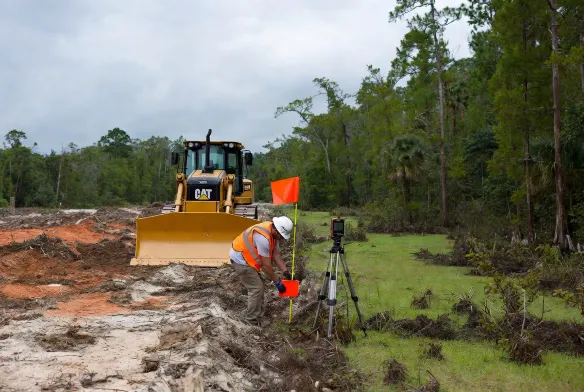
We identified the primary and reserve drainfield areas on a Trimble GPS site map.
Those two zones got zero dozer traffic. Zero compaction. Zero passes.
DOH soil evaluation: passed first time.
That is the only way to clear a lot for septic in Jacksonville FL.
Septic System Site Prep Jacksonville FL — What Your Clearing Crew Must Know Before Starting
Most Jacksonville FL land clearing companies treat every lot the same.
Flat rate per acre. Same equipment. Same pass pattern. Done.
Septic system site prep is a different discipline entirely.
Here is what has to happen before a single machine moves on a
lot designated for septic installation in Duval County:
Identify and flag the primary drainfield area from the septic permit application.
Identify and flag the reserve drainfield area — Florida Administrative Code 64E-6
requires a 100 percent reserve field area on every new installation.
Mark a no-equipment zone across both flagged areas.
Confirm the high water table depth from the USDA Web Soil Survey before clearing —
drainfield bottom cannot exceed 48 inches below grade on most Duval County
residential lots due to the seasonal high water table.
Check setback requirements from the clearing boundary:
septic drainfields must maintain minimum 10-foot setback from property lines,
50-foot setback from surface water bodies, and 75-foot setback from potable wells.
Any tree root systems within the designated drainfield area must be removed to
a minimum 24-inch depth — but without equipment compaction.
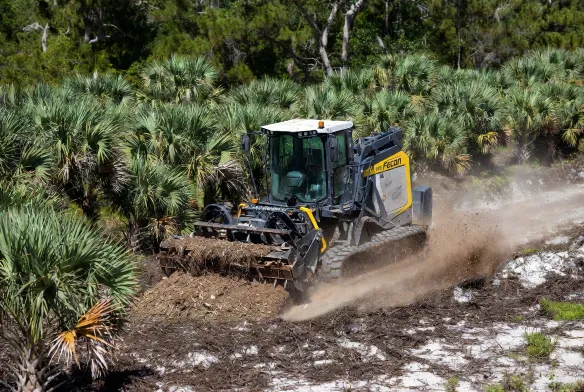
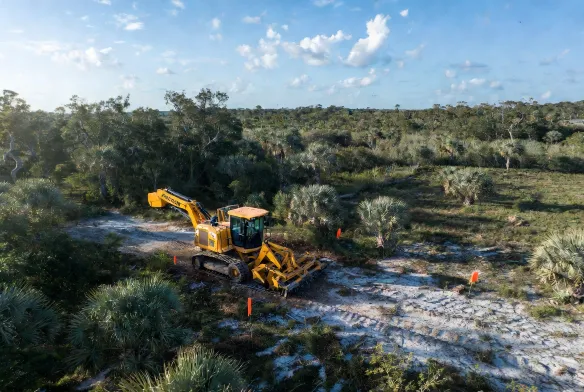
Hand removal or a Fecon FTX148 operating at minimum ground pressure is the
correct approach for this zone.
Land Clearing Septic Tank Installation Duval County — Soil Rules That End Projects
How Jacksonville FL Soil Types Affect Septic Drainfield Performance —
Three Duval County soil types determine whether your lot passes or fails a
Florida DOH percolation test:
| Duval County Soil Type | Percolation Rate & Drainage | Septic System Suitability | Compaction & Clearing Risk |
|---|---|---|---|
| Lakeland Fine Sand Mandarin, Southside, Baymeadows | 3 to 15 min / inch Fast drainage | Best Case Scenario Standard conventional systems | Low Risk Naturally forgiving soil structure |
| Pomona Fine Sand Arlington, Southeast Jacksonville | 20 to 45 min / inch Moderate / Seasonal water table | Mound System Required If water table rises within 18″ | Moderate / High Risk Clear ONLY during dry season |
| Plummer Fine Sand Northwest Jacksonville, Westside | Exceeds 60 min / inch Poor drainage / Heavy retention | Engineered / Advanced Units Adds $8k to $22k in extra costs | CRITICAL RISK Heavy equipment fails it instantly |
Jacksonville Septic Tank Phase Out — What It Means for Your Clearing Project
JEA and the City of Jacksonville are actively expanding sewer service into areas
that previously relied on septic systems.
The Septic Tank Phase Out Program has already completed construction in Biltmore
and Beverly Hills neighborhoods and is advancing through Riverview and Christobel
as of 2025.
If your Duval County lot sits in a current or future phase-out priority area,
installing a new septic system may not be the right long-term strategy.
Before clearing land and proceeding with septic permits, check your parcel against
the JEA Phase Out Program map at jea.com.
If sewer connection is scheduled within 5 years, the cost difference between a
septic installation today and a sewer tap-in tomorrow is worth calculating first.
We have walked three Jacksonville FL property owners through this exact decision
in the past 18 months.
In two cases, waiting for sewer access saved more than $14,000 compared to
installing and later abandoning a septic system.
CONCLUSION
Land clearing for septic systems Jacksonville FL requires a crew that understands
soil science, permit setbacks, and drainfield protection — not just a crew that
can run a dozer.
The Orange Park homeowner paid $7,400 in soil remediation because his clearing
crew did not know where the drainfield was.
The St. Johns County developer lost 31 days because the wrong equipment ran
over the wrong ground.
Call Marcus directly at (904) 748-4055.
We will review your septic permit application, map the drainfield zones,
check your Duval County soil classification, and clear your Jacksonville FL
lot in a way that passes the DOH evaluation the first time.
Land Clearing for Septic Systems Jacksonville FL — Frequently Asked Questions
Stop Paying Twice — Hire the Right Crew First
The Orange Park homeowner cleared his lot in four days — fast price, machines gone by Friday.
Three weeks later, his drainfield failed the perc test. Soil remediation cost: $7,400.
The clearing crew had moved on. He paid alone.
Call Marcus at (904) 748-4055. Free site walk. No deposit required.